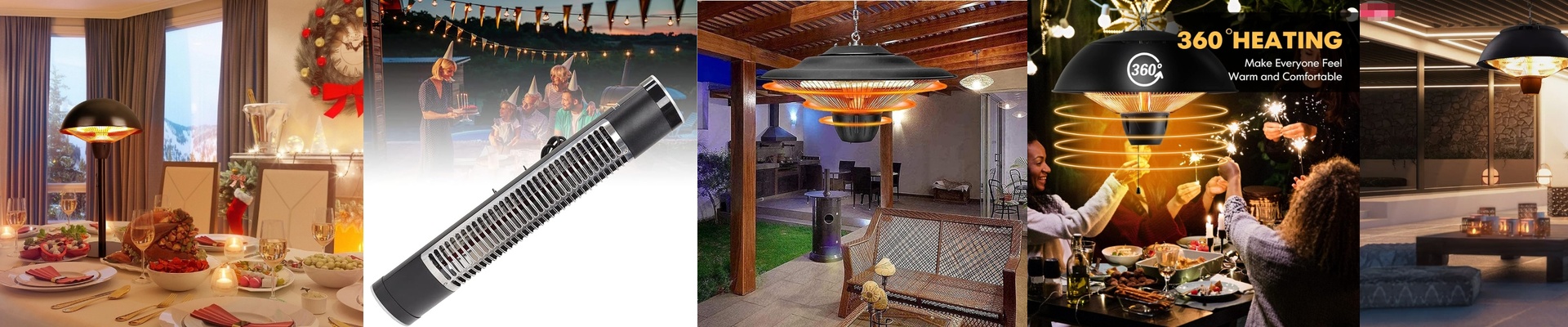
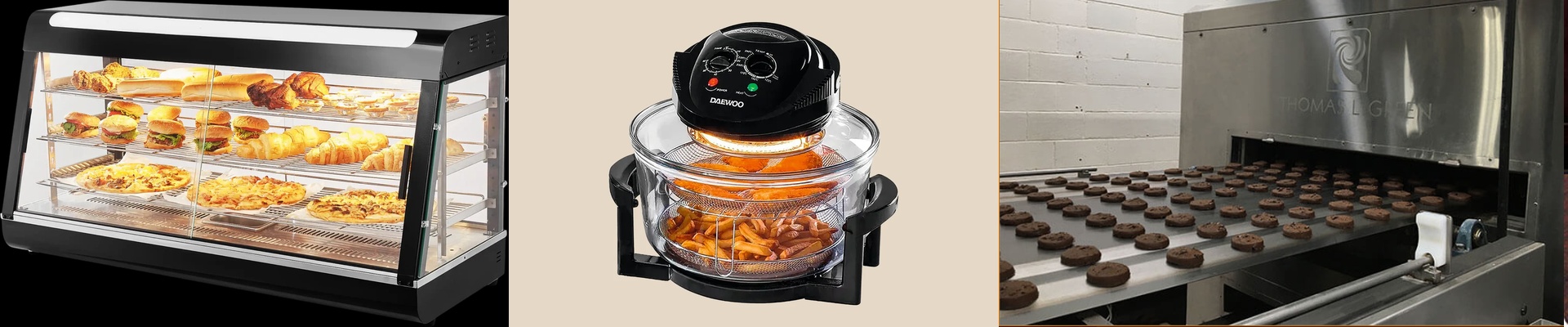
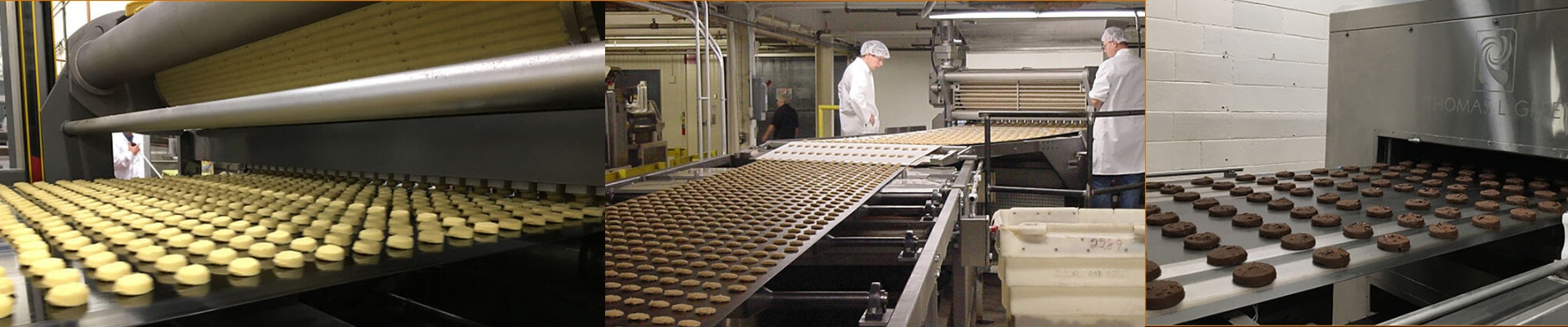
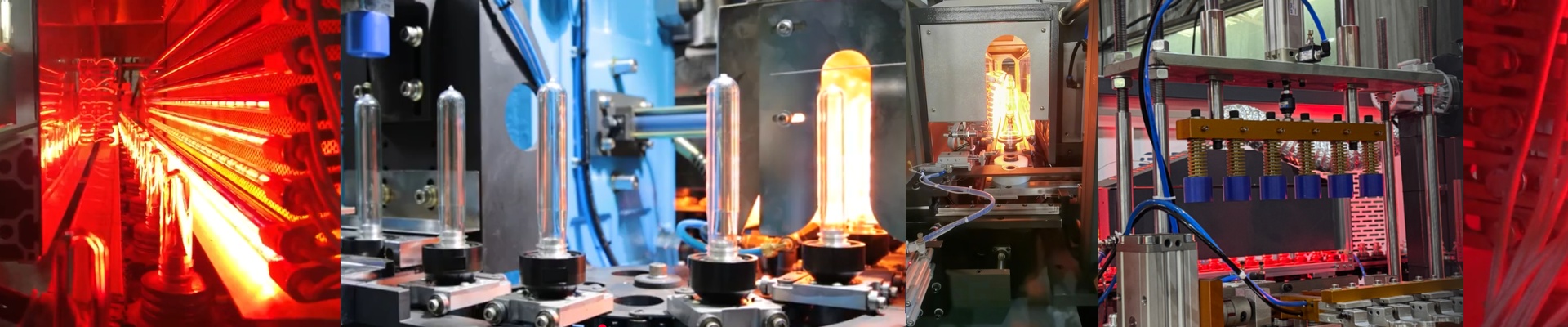
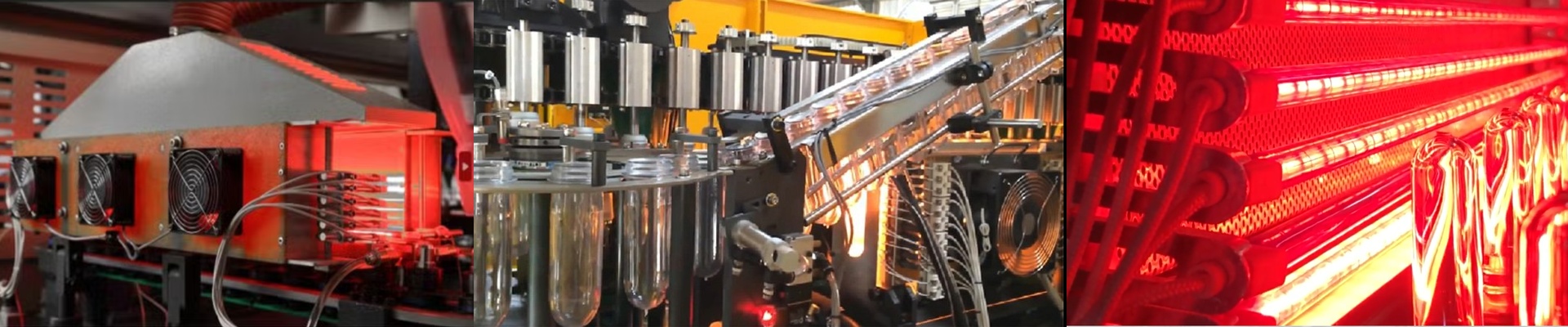

On the blow molder, the oven is where the whole cycle lives or dies. Underheated preforms give you white haze and a weak biaxial stretch. Overheated ones sag before they even see the mold. When the heating tunnel is full of hot spots and cold zones, scrap climbs and you spend more time chasing temperature than you do running parts.
What matters, technically
We run infrared lamps built for PET oven duty—short-wave and medium-wave—with watt densities matched to the heating zone and the preform wall thickness you’re running. Standard options cover 100–3000 W, 120/230/240 V, quartz or halogen emitters, and R7s or custom connectors so they drop straight into Sidel, Krones, SIPA, Husky, SACMI, and Nissei ASB oven assemblies. The emitter response is fast—full output in seconds—so the control system can hold a tighter band and cut temperature overshoot after jams and restarts.
Why it works in the real world
With spec-accurate lamps, you get the original heating map back across the tunnel. That means more consistent preform temperature, fewer pinholes and dimensional drifts, and less rework. Energy use drops when the emitter is matched to the zone duty cycle, and longer service life—5,000+ hours is typical in the field—means fewer changeouts and less oven downtime. For wholesale buyers, standardized lengths and terminals make stocking easier and let you swap lamps across machines without rewiring.
The things to get right
Match the lamp to the reflector geometry and the oven airflow. Throwing a higher-wattage lamp into the same socket can overheat nearby components and shift the spectral balance, so we size by the OEM heating profile, not by “more power.” Also verify voltage at the terminal—line sag can push a 230 V lamp outside its window. The swap is about 15–20 minutes with proper lockout/tagout; after installation, re-tune the zone setpoints and verify with a handheld pyrometer.