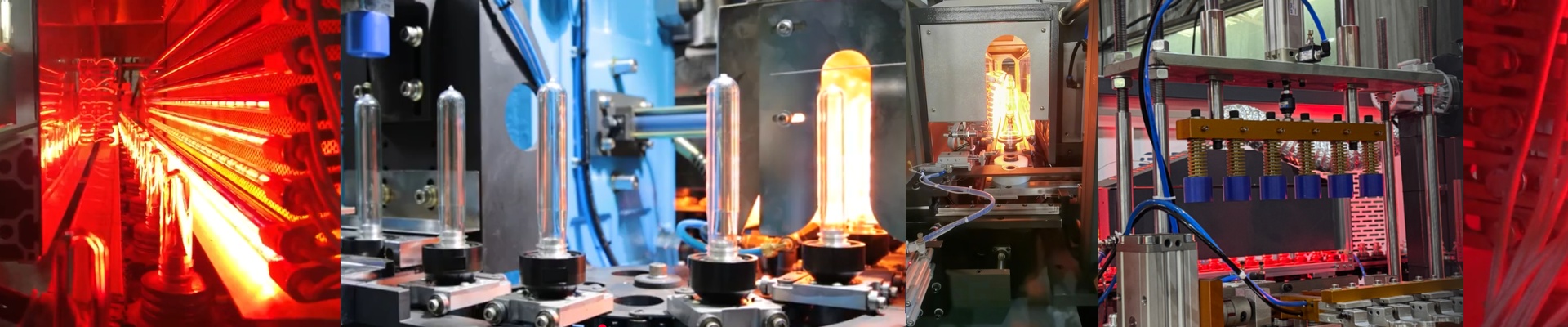
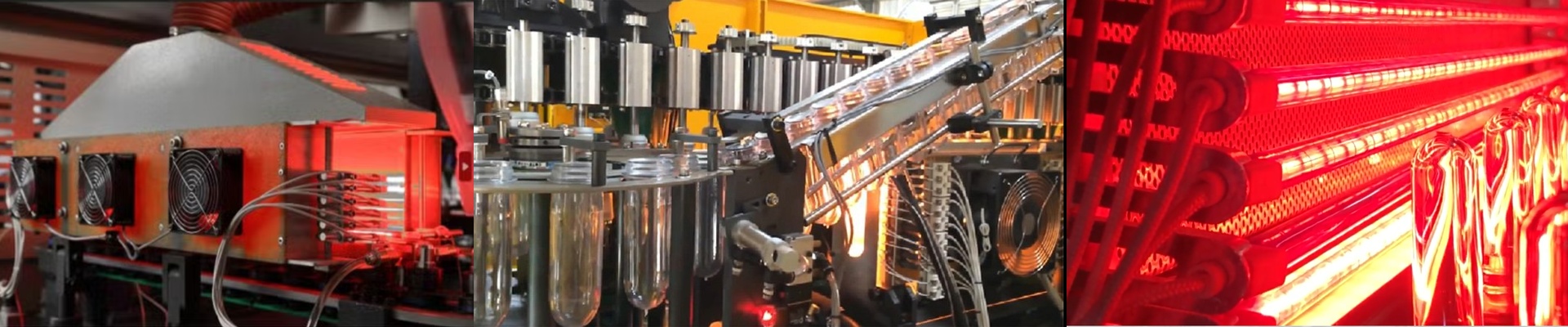
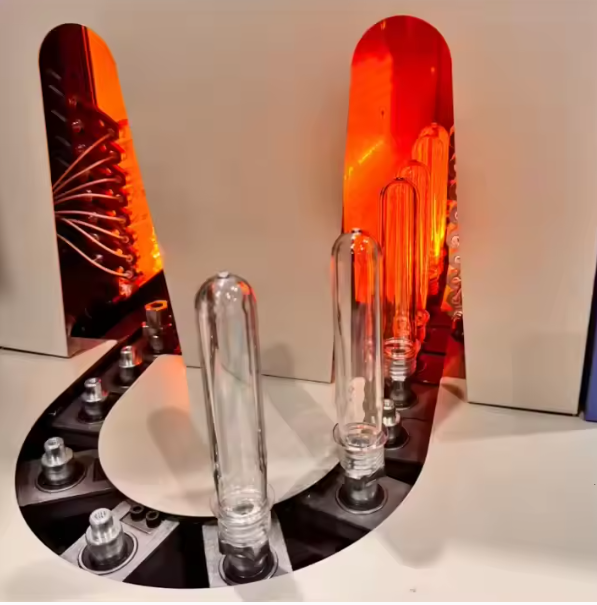
Out on the blow molding floor, PC haze and stress marks almost always come back to uneven preform heating. When the heating tunnel isn’t doing its job, you get rejects, slower cycles, and the same endless talk about switching resins. We built our infrared heating solution to stop that cycle at the root.
What matters, technically
Our NIR emitter runs on 230V with tight power control, so you get stable, repeatable heat and a consistent preform temperature across the profile. The quartz tube is matched to the OEM heating zone geometry, and the standard R7s connectors make it a quick swap-in on Sidel, Krones, SIPA, Husky, SACMI, and Nissei ASB blow molders. You get 1:1 parameter parity—same watt density, same response curve, same thermal behavior—so the machine control logic treats it like original equipment.
Why it works in practice
With this IR setup, you cut down on hot-spot drift and cold zones that create internal stress in PC. The payoff is better clarity and lower haze, and you get there without reworking the blow molder or changing resin grade. Energy use drops because the emitter hits setpoint fast and holds it with minimal overshoot. We’ve got units running 5,000+ hours with less than 5% output drop, which means fewer lamp changes and less downtime. You keep OEM heating performance, but you pay a replacement price that fits the maintenance budget.
The practical details
Installation is straightforward on most machines, but you have to verify lamp length, end-cap type, and mounting brackets against your specific blow molder model and heating tunnel. If the reflector geometry isn’t the same as the OEM, light distribution can shift and you’ll need a minor retune of the power curve. Plan a 30-minute validation run after the first swap to confirm temperature uniformity and cycle time before you go full production.