


Introduction
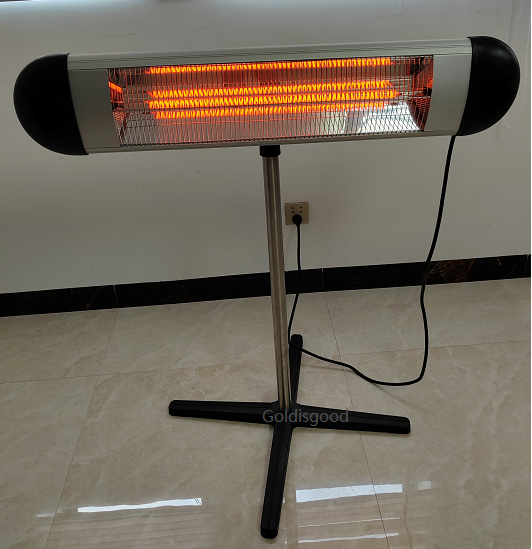
We built these infrared halogen heaters for tiny spaces—like dorm rooms—where safety and reliability can’t be an afterthought. It’s one thing to make heat. It’s another to keep the inside wiring protected from that heat, day after day. Without a proper seal on the lead wires, even a well-made heating element can fry itself. That means short circuits, failures, and the kind of headache you don’t want in a small room.
Power, Voltage, and Size—Kept Real
These heaters run on standard mains voltage (120V/230V), with wattages chosen to fit small footprints. Everything is compact, especially the halogen lamp assembly. We had to make the lamp length and the way the lead wires run fit neatly inside a tight enclosure. Here’s the catch: tight spaces mean heat builds up around the wiring. If the lead wires aren’t sealed where they enter, hot air and radiant heat travel along the insulation and push the wires past their temperature limit. So we match the lamp length and wattage to the enclosure’s thermal load, giving you steady heat without overheating the wiring path.
The Materials That Matter—Halogen, Quartz, and Smart Connections
The heart of the heater is a halogen capsule inside a quartz tube. Halogen gas keeps the filament stable and slows down that annoying blackening, but it also runs hotter than basic infrared designs. Quartz handles the high temps and sudden thermal shocks beautifully. The real pressure point? Where the internal wires meet the external leads. That’s why we use high-temperature lead wire with solid insulation and a sealed feed-through. And the connector is picked for a secure, reliable contact that stays tight even when the lamp body is blazing hot.
Built for Real-Life Dorm Rooms
Dorm life means the heater cycles on and off a lot, and it’s often close to bedding and furniture. That kind of environment demands a design that can take the strain without giving up. Our sealed lead wire approach stops hot gas from migrating and keeps insulation from cracking over time. The payoff is simple: fewer failures and performance you can count on. Just one note—because of the sealed joint, there’s a small dimensional constraint at the lamp base. Check clearance in the socket and enclosure. Get that right, and you’ve got a reliable, drop-in heat source that just works.