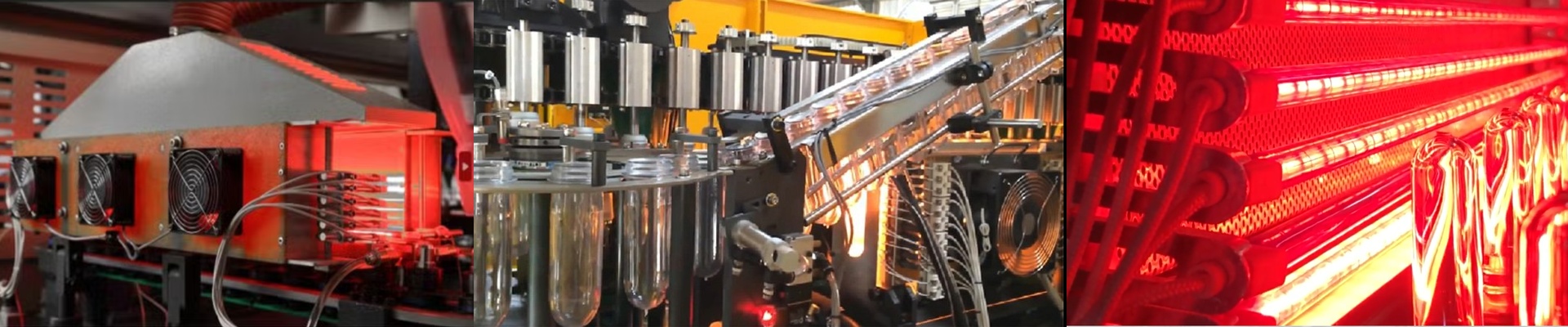

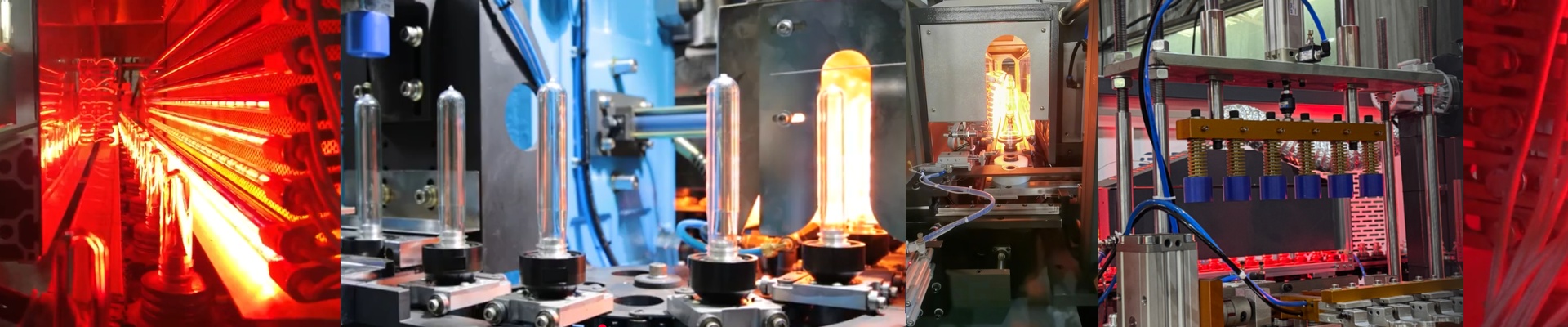
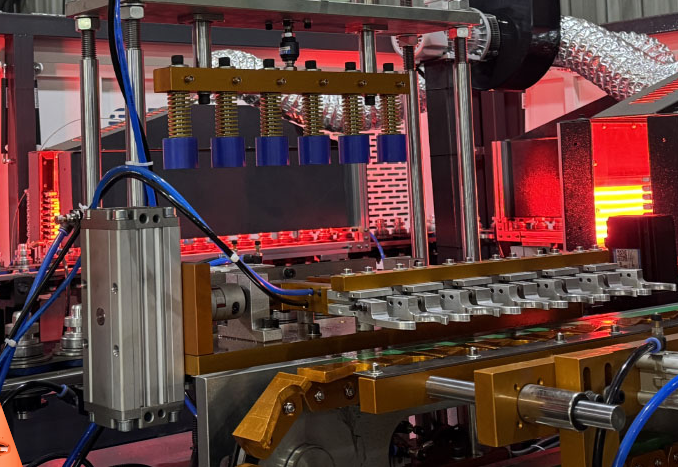
On the blow molding floor, preform heating is the make-or-break point. If preforms come up Short on heat, you get brittle bottles and pinholes. Overheat them, and you burn money on energy while lamps burn out faster. The heating tunnel has to deliver repeatable heat, snap back fast, and hold steady output so the stretch blow molder keeps running at its rated speed. What actually matters under the hood Short wave infrared (SIR) emitters punch energy in the 0.78–1.5 μm band, which PET soaks up fast. That means you heat the preform surface quickly without wasting watts heating the tunnel air. The design is straightforward: quartz tube, halogen filament, and tight filament geometry for even radiance. Ratings run from 100 to 3000 W, with 120/240 V options and common R7s or double-ended connectors, so you can swap them into existing holders without rewiring the whole section. Response is near-instant—full output in under 2 seconds. Temperature control is direct and repeatable, so you can hold preform surface temperature within ±1 °C across the heating zone. Why it fits the machines we run SIR emitters match the heating profile blow molders are built around. The fast ramp-up supports higher cycle rates on Sidel, Krones, SIPA, Husky, SACMI, and Nissei ASB machines, cutting the time preforms spend in the tunnel. Tighter temperature control improves bottle weight consistency and reduces scrap from over-stretched or under-blown cavities. Energy use drops because the heat goes where it counts—right onto the preform—instead of warming up the whole tunnel mass. In the real world, 24/7 lines are seeing lamp life of 5,000+ hours with less than 5% output decline, which means fewer stops for replacements. The stuff you learn the hard way SIR emitters run hot at the surface, so clearance and shielding have to follow the machine’s original safety spacing. Keep reflectors clean, too—dust buildup kills output fast. If your line cycles through large preform sizes, confirm the emitter length and power density match the dwell time and zone layout. Too much power in one zone and you’ll see scorching. For a clean install, match the emitter to the OEM heating section geometry and double-check voltage and connector type before you order.