




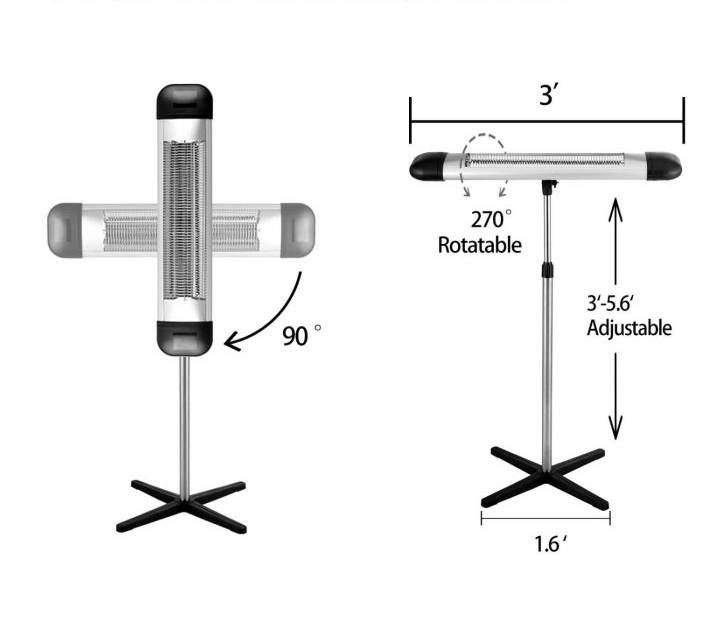
Putting a 1500W infrared heater in your bathroom or out in a gazebo isn’t as simple as just slapping on a waterproof cover. You’re dealing with a lot of power and a lot of moisture. If the insulation slips up, you’re looking at a ground fault—and nobody wants that. Keeping things dry and safe Here’s the thing: with a 1500W load, the current draw is no joke. We don’t take chances with the housing or the electrical junctions. We use double-insulated cabling and reinforced polymer gaskets. Why? Because moisture loves to creep into terminal blocks. Standard plastic just won’t cut it here; it needs to handle the heat and stay non-conductive even when it’s soaking wet. The battle with steam Infrared lamps get incredibly hot. In a steamy bathroom, you get this constant cycle of condensation and evaporation right on the lamp surface. To handle that, we use housings with specific IP ratings for “Zone 1” and “Zone 2” areas. Basically, it means the seals are tight enough to keep water droplets far away from the live contacts. We also use ceramic insulators at the ends of the lamps because they don’t break down when they’re blasted with steam day after day. The reality check The great part about high-wattage infrared is that it warms you up instantly. But that 1500W draw means your circuit breaker needs to be up for the task. If you try to wire this into an old bathroom circuit with thin wires, you’ll notice a voltage drop. The lamp won’t feel as hot, and worse, your wires could start overheating. And please, check your grounding. Even the best insulated system needs a solid earth connection. If something does go wrong, the current needs a clear path to ground so the breaker trips immediately. It’s the only way to be sure you’re safe.